2025 – A Year of Change

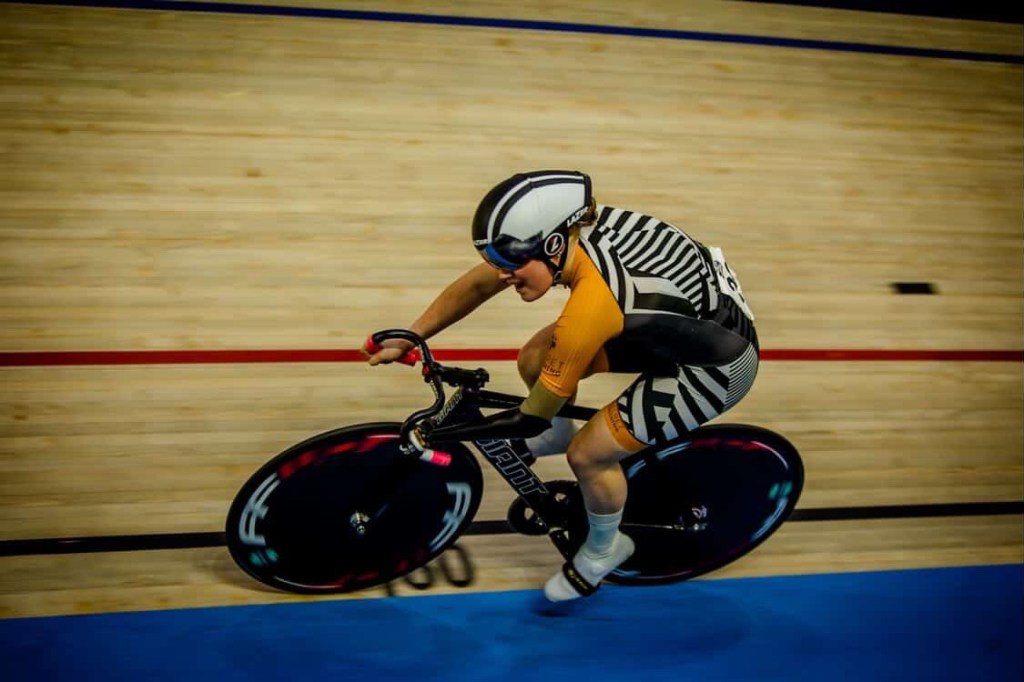
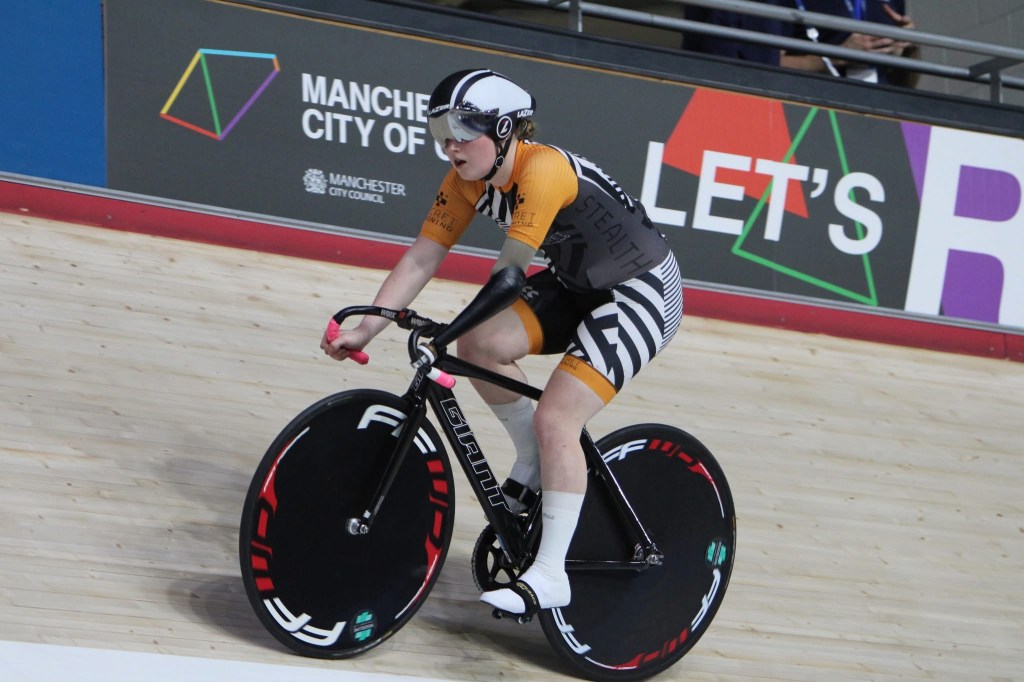
The next part of Elsie’s cycling adventure begins a few months before her 14th birthday. Turning 14 is a big milestone — it means she can now compete at National Para (Paralympic) events alongside adults.

As her birthday (6th January) approached, we started looking for her next para race. Luckily, there was one at Manchester Velodrome in February — a perfect, low-key race for Elsie to dip her toe into the world of national para competition.

And so, the proper para-racing adventure began.


Preparing for Para Nationals

Elsie’s first events were the 1km Time Trial and the 4km Individual Pursuit — more on those later.

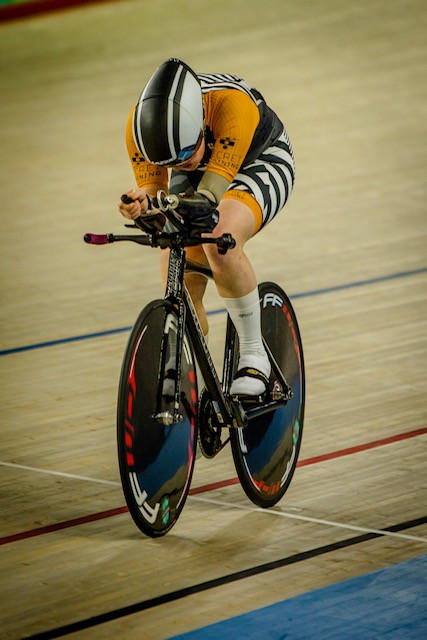
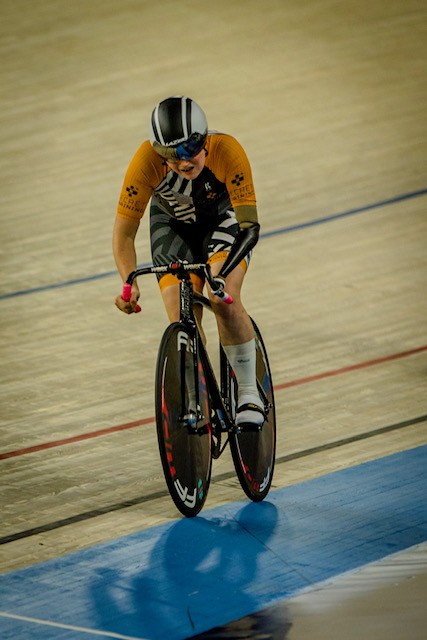
For these, she needed aero bars fitted to her track bike. That created a few challenges because Elsie rides fixed in one hand position, so she can’t move her hands mid-ride. After a lot of trial and error, and with help from others in the cycling community, we found a solution.

Tim Lawson from Secret Training kindly loaned some aero bars, and we spent hours experimenting — first with bits of wood, then plastic gas pipe, jubilee clips, and electrical tape — to find the right setup. It had to work and look tidy!

Eventually, the limb centre provided an Otto Bock hoop attachment, and after cutting the correct thread in the bar, Elsie’s new setup worked beautifully — and she’s still using it.


Finding the Right Gear

Most of Elsie’s pre-event track time focused on developing her aero position and choosing the right gearing.

Since she now competes in adult para races, she can technically use any gear she wants — but she still has to be able to pedal it! We found that going half a gear harder worked best.

Training time was limited, and just before the event we discovered that the Individual Pursuit (IP) would be 4km (16 laps), not 3km as originally thought. “It’s only another four laps…” 😅


Para Nationals Begin

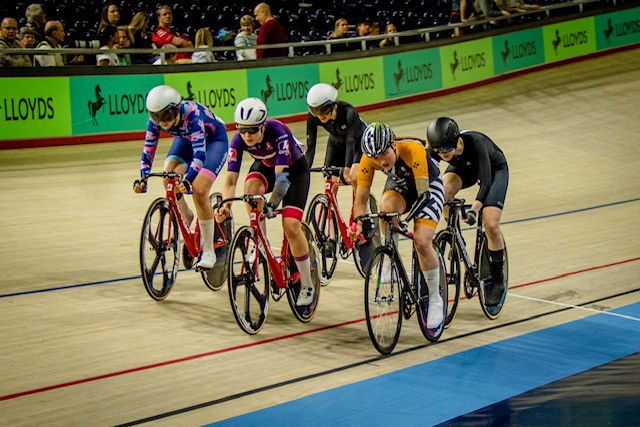
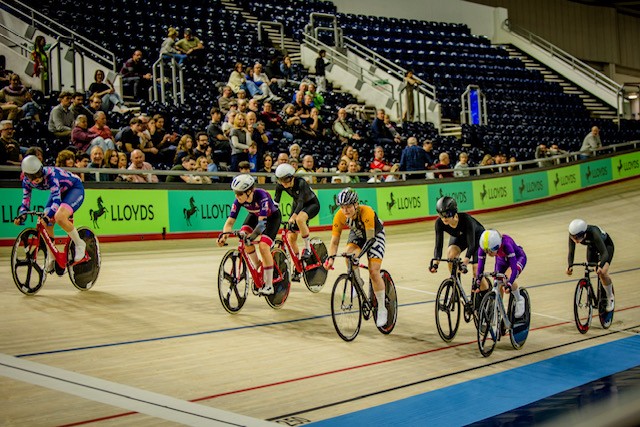
We thought this would be a small race — but not quite! The para events were run alongside the able-bodied races, with Olympic riders competing too.


Day 1 – 1km Time Trial

There were four riders on the start list, though one withdrew due to illness. That meant Elsie was already guaranteed a podium — but she still had to earn it!

Elsie (a C5 rider) was up against C1 and C2 athletes, meaning factoring would apply — time adjustments to level the field.

She gave it everything and finished second, just fading a little on the last lap. The British Cycling para coaches clapped her off the track — Elsie had officially arrived!

At first, we thought she’d missed the podium, but as we were packing up, someone told us she’d finished second overall. Cue celebrations! 🥳


Day 2 – 4km Individual Pursuit

Only three girls signed on for this event, so only two steps were available on the podium — and the other riders were 26!

Elsie stuck to her plan: start steady, then build. She got excited and blasted through the first three laps at 18 seconds each, instead of the planned 20, but she rode strongly and held her form.

At the 1km mark, Elsie was still leading. Eventually, Morgan took the win, with Rebecca second — but only 14 seconds ahead of Elsie. With more training, we’ll close that gap!


Team Sprint Finale

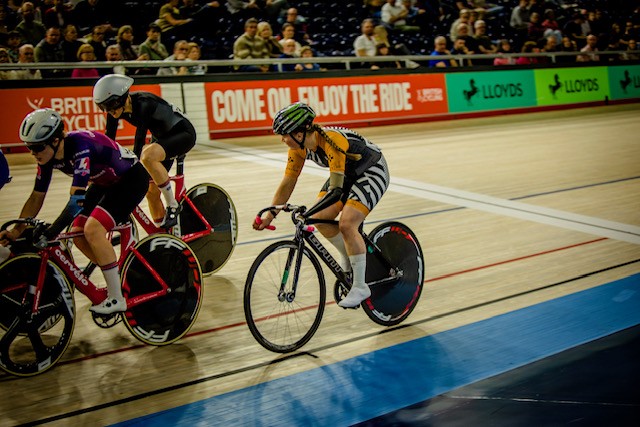
The final event was the Team Sprint, with three riders per team — each doing one lap at the front before peeling off.

Elsie joined Wayne and Ben, and they’d never ridden together before that morning. After just a couple of practice laps, they raced.

In the first round, they finished second, which we thought was the end of it — but they were called back for the bronze medal ride that afternoon in front of a packed crowd.

There was a false start to add some drama, then they went again — and finished second once more, with an improved time. A great performance and a fantastic learning experience.


New Equipment and Exciting Partnerships

During the event, we met Asad, who offered to sponsor Elsie with a 3D-printed arm for her track bike — the first of its kind. The first prototype didn’t quite work, but the second version was perfect. It’s now in use and holding up brilliantly.

If I can persuade Asad to make another arm for the aero bars or cyclocross bike, I’ll be a very happy man! 😇


Looking Ahead

After many races across the country, the 2025 road and track season has come to an end — and what a year it’s been.

British Cycling have now invited Elsie onto their Para Programme, and she’s being coached by Emma Pitt, a BC Talent Coach. Exciting times ahead!

Emma plans for Elsie to compete at Para World Cups in 2026 — likely in Belgium and Italy. Track Nationals return in February with a new para format: 1km TT, 4km IP, Scratch Race, Elimination Race, and the ever-fun Team Sprint.


Cranked Magazine Article

Many thanks to Seb from the sadly discontinued Cranked Magazine and author, Hannah Collingridge, for the use of this article.

We all like a bit of technology to make our riding easier or more fun. Get any group of cyclists who have been riding a few years and stick them on the topic of what their favourite technological advances have been since they were a lad and they’ll all have firm opinions. Common themes are tyres with much stickier rubber and brakes that work in the wet. Sometimes we all adapt the technology for our own purposes, moving away from what it was originally designed for. Think dropper posts, aimed at getting the saddle out of the way on technical downhills, but frequently used by those cracking on a bit who like dropping the post to ease getting their ageing hips over the saddle. There’s always more than one way of looking at things.

But what if you needed that adaptation of technology to actually enable you to ride in the way you’d like?

Now consider, for a moment, what you do with your arms and shoulders when you ride. On road, they are handy for shifting weight for cornering and that pulling thing you do when going uphill steeply. You can alternate between drops and hoods and top of the bars depending what sort of terrain you are on. Off road, all of that becomes more exaggerated, more critical. There’s a lot more wrist movement, especially riding technical ground; shoulders and hips constantly flick to adjust weight and keep traction. When racing cross there’s also the addition of getting on and off the bike, shouldering it over the obstacles, and trying to keep upright on skinny tyres. Plus, in a traditional cross season there should be plenty of mud to add to the fun keeping your balance. Now imagine doing that with part of your left arm missing.

Elsie Hughes is a ten-year old who rides all sorts of bikes and races cyclo-cross. She was born with a little left arm (that’s the family’s fond name for it). It’s the result of congenital amputation in this case caused by an amniotic band tangling with Elsie’s growing arm in the womb. This can cause the limb to be starved of blood supply to the extent sometimes that the tissues die and are absorbed back into the amniotic fluid. On the X-rays of Elsie’s arm there is a clear cut through the bone just below her elbow. So she has a full upper arm, the elbow and then a very short lower arm. The presence of bones means that theoretically she could break her arm. She hasn’t done yet, but when we are talking about it, it gives her food for thought about what the cast would look like if she did. Then she moves on to what she’d draw on it. In fact, give her a pen and she’s likely to start drawing faces on the end of her arm anyway. Her mother, Emma, says it’s one of the things they check before she goes to school on a Monday.

When she’s riding therefore there are two main issues. The first is how to hold onto the bar, and the second is how to brake effectively. Both are on-going developments as she gets older. When she started riding with her parents and elder brother, she had a bit of pipe lagging on the handlebar and a sock on her short arm to add a bit of comfort and keep it warm. The problem with this is that there is no attachment to the bars and it put Elsie’s shoulder in a dipped position. Long term that would have led to many other issues with the way she twisted; having a prosthetic arm means she is better balanced even in everyday tasks such as sitting, writing and eating. This meant she really did need something specifically for riding.

Contact with their local limb centre at Seacroft, Leeds led to the development of what Elsie called her ‘Lego arm’ allowing her to be clipped onto the bars. Seriously, think of a Lego arm and the clip on the hand – that’s exactly it. This radically changed her riding position, her comfort and therefore her confidence and enjoyment. The only trouble was when racing cross; because the arm clipped to the bar at 90 degrees when she dismounted in a cross race the arm would often come off as well. Elsie being Elsie just dealt with it but it did lead to discussions about different designs as she grew older. Her arm man, Asad Khan, developed a new fitting for the handlebar end: basically, it’s a ball and socket. The ball is on the end of her arm and can get pushed into a nylon socket on the handlebar. The socket is then screwed in place holding the arm to the bar but allowing 360 degree movement, plus she can unclip from the arm for carrying her bike during a race. Commissaires and marshals at races are told where the eject button is in case she crashes and can’t free herself. At the other end of the prosthetic is a silicone sleeve her own arm slips into. Apparently, this is freezing in winter and sweaty in summer. She has been known to pour sweat out of the sleeve on a warm day. Being ten she takes great delight in disgusting as many people as possible with the process.

Because she needs to be clipped to the bars, riding drops where the hand position needs to change isn’t an option. Racing track is fine though so she has a track arm as well that remains in one position.

As she’s still growing, and will be for some years, she needs a new arm on a fairly regular basis. Covid halted progress for a while but she’s just got an updated one. Videos of her riding are sent to Asad so he can work out the movements in her shoulder and elbow as she rides so the arm can work with her riding, not against it. This actually forms part of his research degree as well. It’s back to the issue of trying to keep things even across her upper body. Off the bike there’s not much she can’t do without her lower left arm, although apparently it stops her tidying her bedroom somehow. She tends not to bother wearing a prosthetic off the bike unless it’s for eating – she has an arm with a fork attached for dining purposes.

Stopping is another issue that has taken some working out. At first Elsie just rode with a back brake which is fine when you are small, light and your parents can run after you to physically stop you. The trouble is as you get older and bigger that doesn’t necessarily give you either the stopping power or the control you need. Her dad fitted a Problem Solver brake adapter so she could use both brakes. These are a clever little gizmo to work with cable brakes allowing two brakes to be controlled with one lever. However, getting any nuanced feeling to the braking is incredibly fiddly and needs fairly constant adjustment. There’s also the drag of the cables to consider which adds to the strain on her braking arm. There have been a couple occasions where she’s had to run up a banking or crash into her dad and a friend in order to stop because her hand has got too tired to brake hard enough.

An Islabikes Creig MTB with suspension forks and hydraulic brakes was the next step. Both brake levers were run on the right-hand side of the bar at different angles so Elsie could reach both levers with different fingers. The one-finger braking afforded by hydraulic brakes was an instant game changer and the fork made riding off-road a lot more comfortable. However, it’s not a bike she could be competitive on at ‘cross so a further development recently has seen her with a rigid Hup frame and fork, skinny tyres and flat bars. Her arm adapter can be jubilee-clipped to the bars – her dad, Wingy (it’s his ears), is for ever looking out for a neater, better solution to this – and she now runs Hope brakes with their adapter lever.

Hope technology do a Tech 3 Duo lever that allows two brakes to be operated via one unit clamped onto the bar. Each lever is a different length so that one finger positioning for each brake is easy. Plus they can be adjusted in the usual multitude of ways Hope levers have in terms of finger reach and bite point. They are a beautiful bit of very cleverly designed technology, and a further boost to Elsie’s riding. Funding for the brakes was provided by No Nonsense races from Shibden CC.

Thoughtful design and engineering have meant that Elsie can ride a bike the way she wants to. Oh, except she wants to learn to tailwhip next.